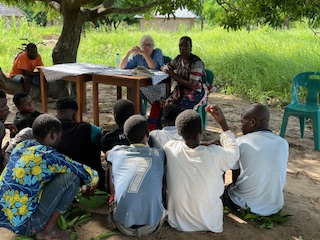
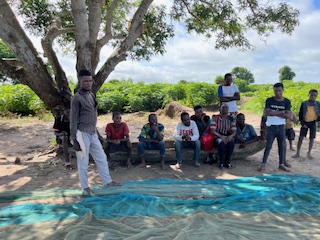
Catherine Mackenzie, who recently became a Trustee of the Zalala Foundation, spent much of the time on her first field trip talking to Idugo salt-miners, particularly those with established saltpans within the mangrove area. During the colonial era, the Portuguese company called Companhia da Zambezia operated a large salt-mining operation employing around 100 locals on the island. Soon after independence, the company left Mozambique and abandoned the salt-mining facilities. Since then, many Idugo inhabitants established their own individual saltpans and salt-mining remains one of the main sources of income for the islanders.
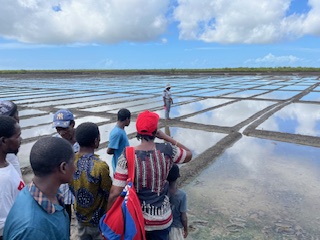
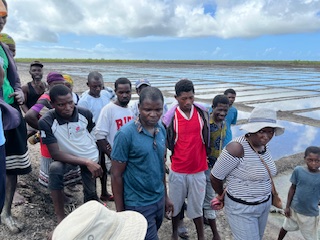
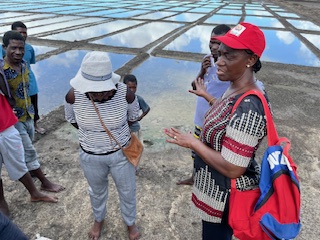
However, plans to implement a mangrove reforestation project on Idugo island are likely to impact on existing and future salt-mining activities which will be tightly controlled. These initial discussions sought to provide deeper insights and understanding of the existing situation with a view to minimising hardship and disruption that might arise once the planned restrictions are put in place.
More recently, the use of the mangrove for firewood that is sold in local markets has posed an even more serious threat to the mangroves. Over the last few years, a mysterious ‘yellowing’ disease has ravaged the formerly abundant coconut groves on Idugo and the surrounded areas This has resulted in a shortage of wood for house and boat construction and also for firewood. Many have turned to the mangroves to replace the wood of the coconut trees and the burning of mangroves for charcoal that is sold locally and in other markets, such as Quelimane has led to the depletion of the mangroves along the coast, posing a serious threat of erosion. The erosion of the mangrove also poses a threat to fish that reside in the mangroves and constitute a major source of nutrition for families in the area.
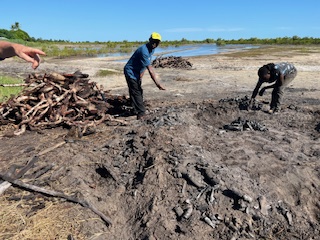
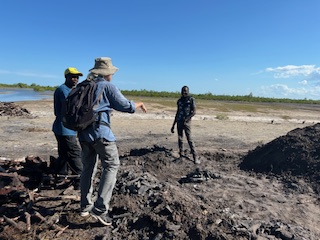
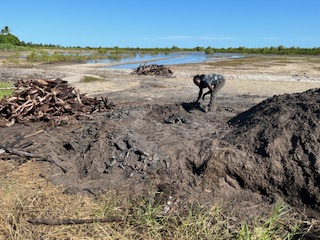
During her field research, Catherine accompanied by the Fundacao team, spoke with local salt-miners, fishermen and charcoal makers with a view to developing a deeper understanding of the current situation to guide future policies and projects aimed at protecting local livelihoods.